Health Benefits Of Ginger
Using Ginger
The health benefits of ginger include its ability to reduce inflammation, and fight bacteria and viruses. Ginger also reduces pain, soothes the stomach, balances flora in the digestive tract, and treats high blood pressure.
Ginger can be very hot to some people, especially in large and extracted doses. I would suggest finding the right amount that you can tolerate.
I blend an inch of ginger ginger root in my daily “Bam Bam” vegetable juice, because of its benefits.
Since ginger can be very “hot,” I find it easy to gain the health benefits of ginger is to blend it in my vegetable juice.
I use the whole ginger root to gain all of the benefits of it fiber, nutrients, and phytonutrients. I use ginger in this precautionary way, so I don’t need to use it in a reactionary way.
I drank ginger tea made from boiling ginger root in a reactionary way to treat illness. I drank it to treat an upset stomach, the flu, and colds, and to remove mucus in my sinus.
I haven’t been sick since I adopted an alkaline vegan diet, so I haven’t needed to use ginger in this reactionary way.
I stopped illnesses from setting, since I maintain ginger’s nutrients and phytonutrients in my body.
Learn About Foods That Support Health and Vitality on the Dr. Sebi Nutritional Guide »
Health Benefits Of Ginger
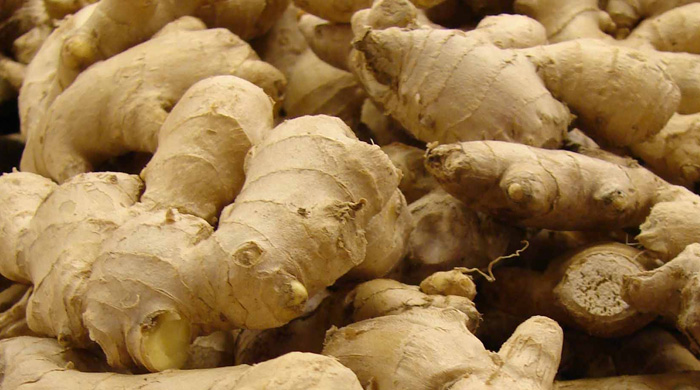
Ginger is the underground stem, or rhizome, of the plant Zingiber officinale. Herbalists have used ginger as part of traditional medicine for thousands of years, because of its benefits in treating upset stomachs, diarrhea, and nausea.
Herbalists also used ginger to treat arthritis, colic, diarrhea, the common cold, flu-like symptoms, headaches, and painful menstrual periods.
Gingers healing properties come from it’s volatile oils, which include gingerols and shogaols.
- Ginger stimulates the production of saliva, therefore making it easier to swallow.
- Ginger reduces high blood pressure by acting like blood pressure medications called “calcium channel blockers.”
Ginger manages the flow of calcium into heart cells and blood vessels, consequently reducing blood pressure. - Ginger suppresses the synthesis the pro-inflammatory molecules in the body known as prostaglandins, and as a result reduces chronic inflammation. Recent research showed ginger extract can inhibit or deactivate genes in the body that encodes the molecules involved in chronic inflammation. The shogaol phytonutrients in ginger appear to provide its anti-inflammatory benefit.
- Ginger reduces pain from osteoarthritis.
- Ginger reduces motion sickness: nausea, vomiting and an overall queasy feeling. The gingerol phytonutrients in ginger appear to provide this benefit.
- Ginger has antibacterial properties. Ginger roots extracts, viz.nhexane, ethyl acetate and soxhlet extracts have antibacterial activities on colliform bacillus, staphylococcus epidermidis and streptococcus viridians.
- Ginger has antiviral properties.[1]
Learn more about herbs used in Dr. Sebi’s methodology and how to use them in my book Alkaline Herbal Medicine.
References:
[1] Fresh ginger (Zingiber officinale) has anti-viral activity
Gingerol
Calcium channel blockers
Ginger
Inflammation
Tags: anti, anti-bacterial, anti-inflammatory, antiviral, ginger, herbs